Search

Cloud security

Graph Cyber Security


Use this showcase if you’re building an application where users need to understand cloud infrastructure, assess exposure and communicate or investigate attack paths clearly. It shows how a cloud environment can be arranged into a visual model that is easier to scan, with services, gateways, functions and storage components grouped by their role in the architecture.

What the showcase demonstrates

The showcase presents a cloud infrastructure as a grouped network. Using our combos feature, rectangular containers combine related parts of the environment. Rather than forcing every component into one dense graph, the layout gives users an organized, layered starting point for inspecting how systems are connected.

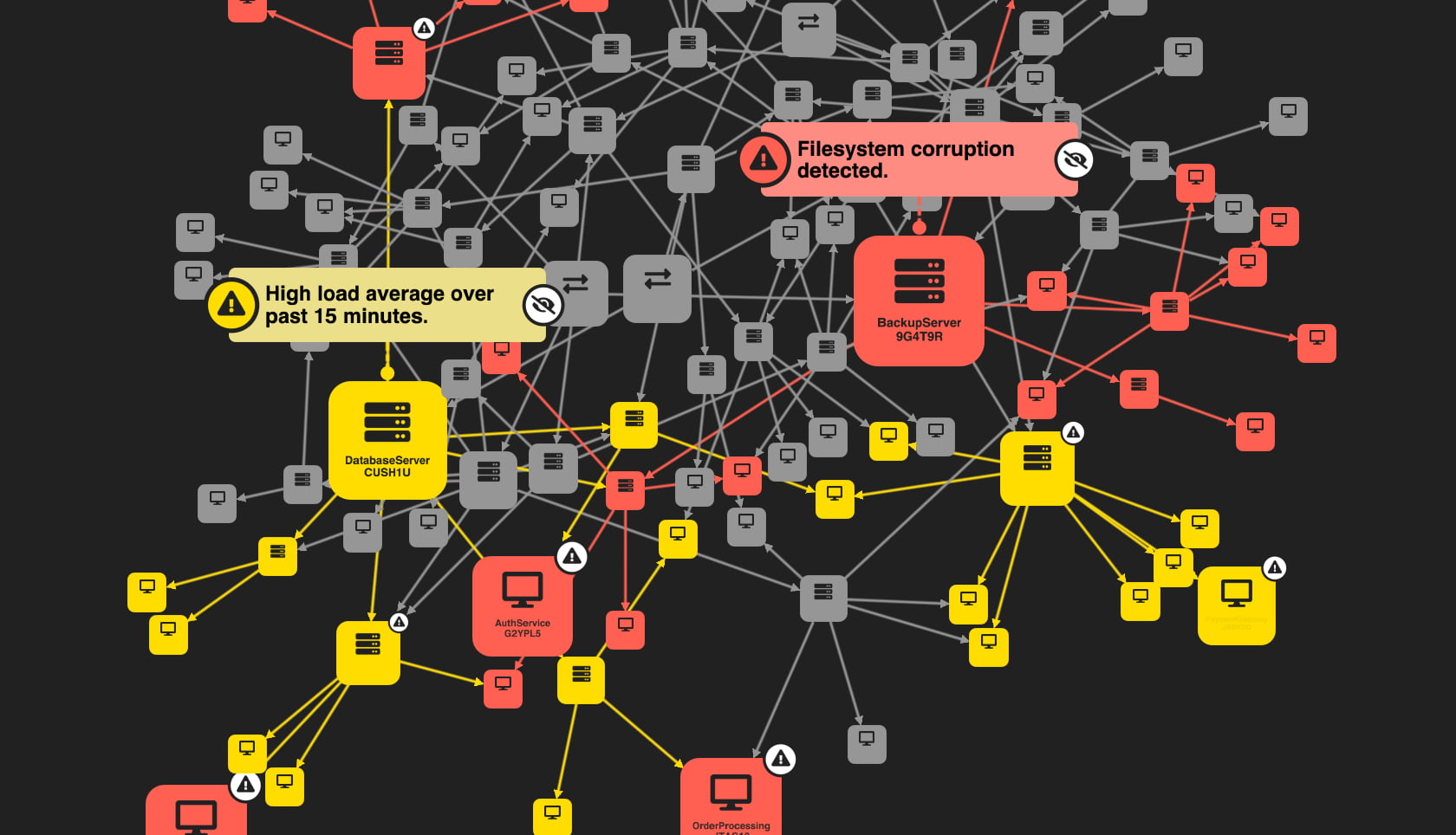
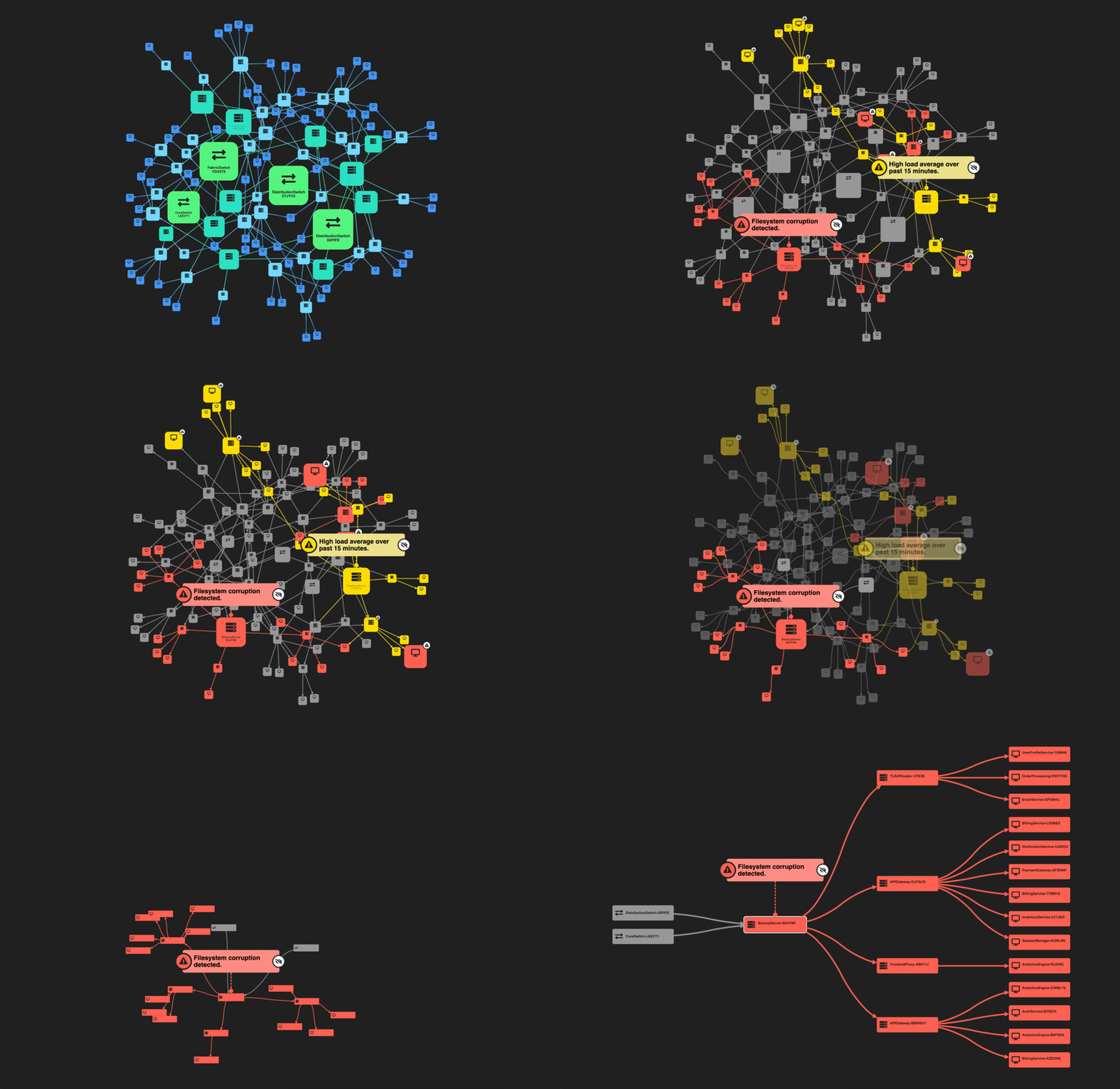
From the full infrastructure view, a user can reveal a potential attack path through the environment. The affected components are highlighted in red while the wider architecture remains visible, making the risk understandable in context. Switching to the focussed view removes surrounding detail and lays the attack path out sequentially, so each step can be followed from the exposed entry point to the sensitive resource at the end.

This gives different audiences a clearer way to discuss cloud posture. Security teams can investigate the technical chain of exposure, while product teams, executives or other stakeholders can see why a misconfiguration or exposed service creates risk.

What you can evaluate

For product and engineering teams, this showcase demonstrates how the SDKs can support interactive cloud security workflows. It shows grouped components (combos), sequential view of tiered data, attack route highlighting, drilldown into affected components, and alternative views of the same connected data.

The workflow turns cloud posture from an abstract risk into a traceable path through the infrastructure.
More from Cambridge Intelligence

See all →

Terms of use

These terms do not alter or supersede any existing agreements between you (or your employer) and us.

By accessing or using any Content you agree to be bound by these Terms of Use. Please review these terms carefully before using the website.

The contents of this website, including but not limited to any text, code samples, API references, schemas, interactive tools, and other materials (collectively, the 'Content'), are made available for informational and internal evaluation purposes only. All intellectual property rights in the Content are reserved. No licence is granted to use the Content for any commercial purpose, or to copy, distribute, modify, reverse-engineer, or incorporate any part of the Content into any product or service, without our prior written consent.

This Content is provided “as is” and “as available,” without any representations, warranties, or guarantees of any kind, whether express or implied, including but not limited to implied warranties of merchantability, fitness for a particular purpose, non-infringement, or accuracy. To the fullest extent permitted by applicable law, we expressly exclude and disclaim all implied warranties, conditions, and other terms that might otherwise be implied.

We disclaim all liability for any loss or damage, whether direct, indirect, incidental, consequential, or otherwise, arising from any reliance placed on the Content or from your use of it, to the fullest extent permitted by applicable law. By continuing to access or use the Content, you acknowledge and agree to these terms.