Pete leads the team of product managers and product designers at Cambridge Intelligence, with a particular focus on product strategy, team learning, and understanding the needs of our customers.
Data fusion investigations
copy url
Graph Timeline Geospatial Intelligence and Security
Use this showcase if you’re building an investigation application that needs to connect different data types that complement each other. It shows how a synchronized graph, timeline and map can turn lawful-intercept-style data into a single tool that offers investigators a clearer account of a person’s activity.
What the showcase demonstrates
The showcase follows a high-priority person of interest through call records and mobile positioning data. A user can focus on the suspect in the graph, review their phone activity on the timeline and identify calls linked to movement sessions. Selecting a highlighted call reveals caller locations on the map, while moving through the timeline shows how those positions change over time.
Instead of treating each record as an isolated clue, the interface brings the investigation into one connected view. It becomes easier to see which call triggered movement, who else was involved, whether both callers started moving at the same time or close to each other and whether they entered a high-risk area.
What you can evaluate
For product and engineering teams, this showcase demonstrates how the SDKs can support multi-domain investigation workflows. It highlights synchronized graph, timeline and map views, assigned priorities, temporal filtering and coordinated geospatial exploration. It can help your team evaluate how similar interaction patterns could support the data and user experience you are building, especially when investigators need to connect relationships, movement and time-based activity in one interface.
A single workflow brings together the core investigation questions: who was involved, where activity happened, and when it took place.
Presented by

Pete Wood
Product Team Lead
Pete leads the team of product managers and product designers at Cambridge Intelligence, with a particular focus on product strategy, team learning, and understanding the needs of our customers.
More from Cambridge Intelligence
See all →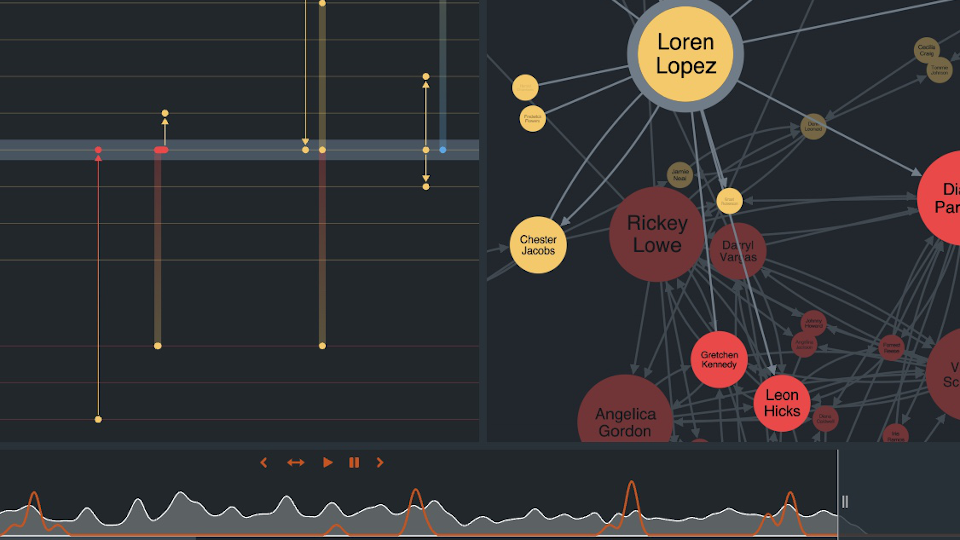
Intelligence and Security
Phone call analysis
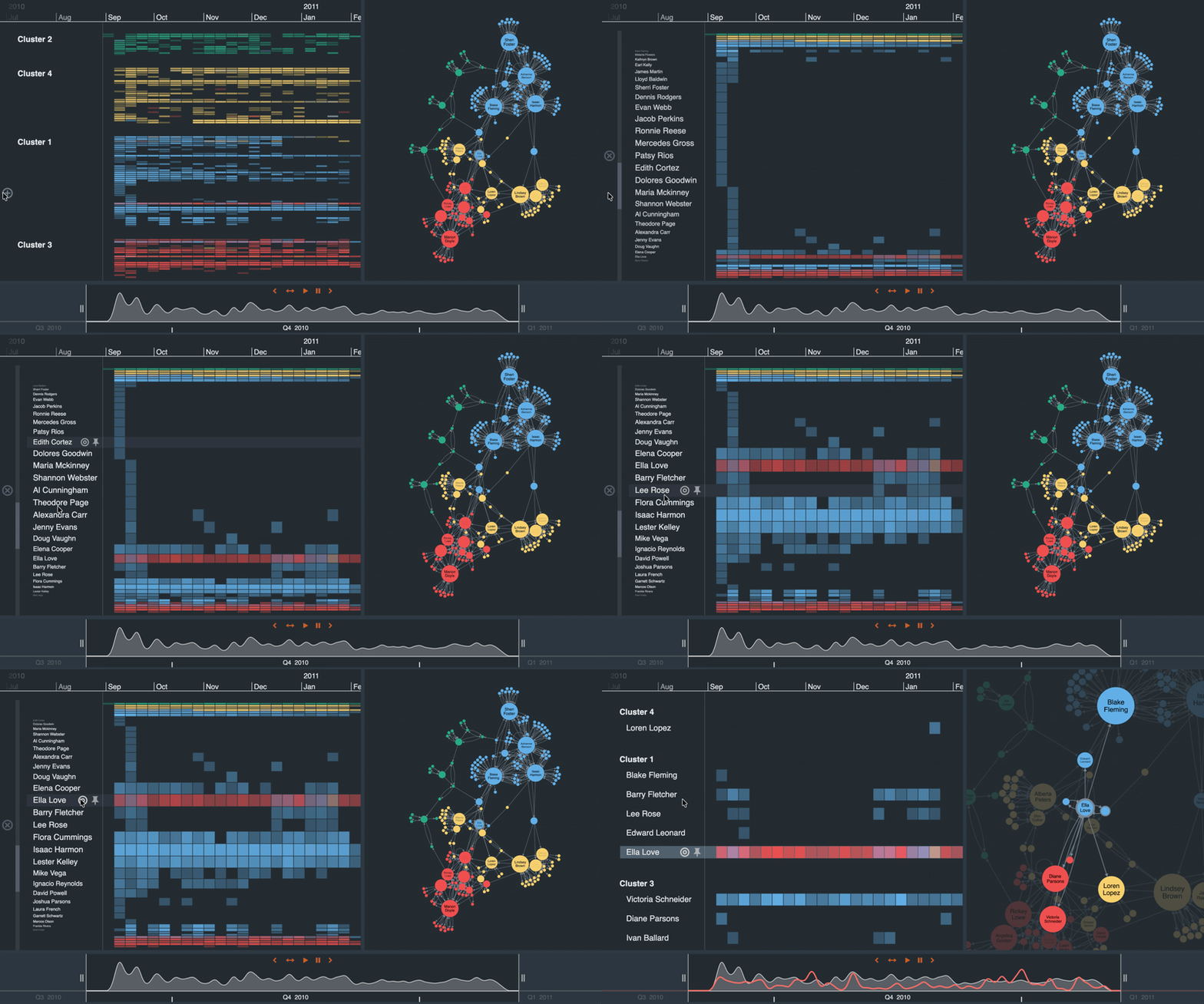
Use this showcase if you’re building an application where analysts need to reconstruct the sequence of calls between people. A network view can show that two individuals are connected, but the timing and volume of their calls can reveal whether that contact was routine, unusual or escalating.
View showcase
Intelligence and Security
Geospatial timelines
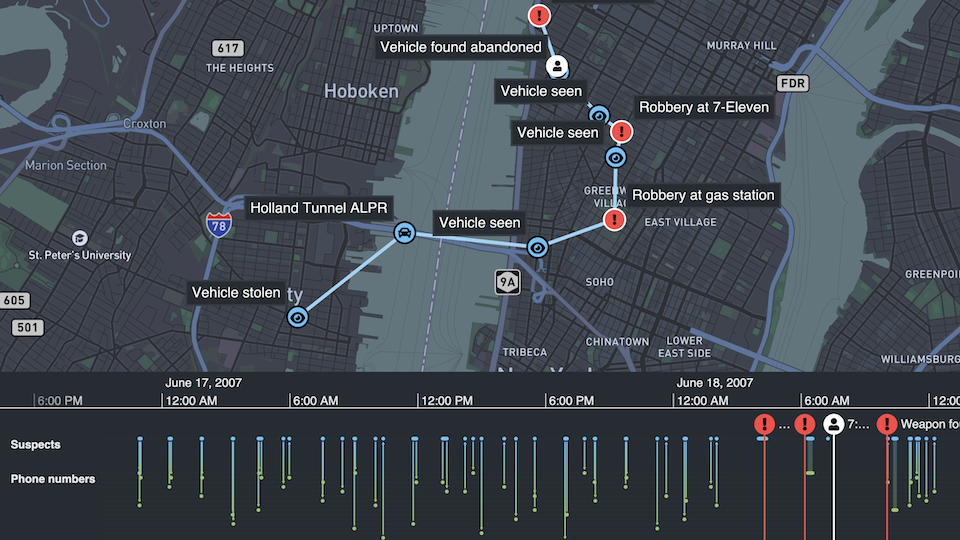
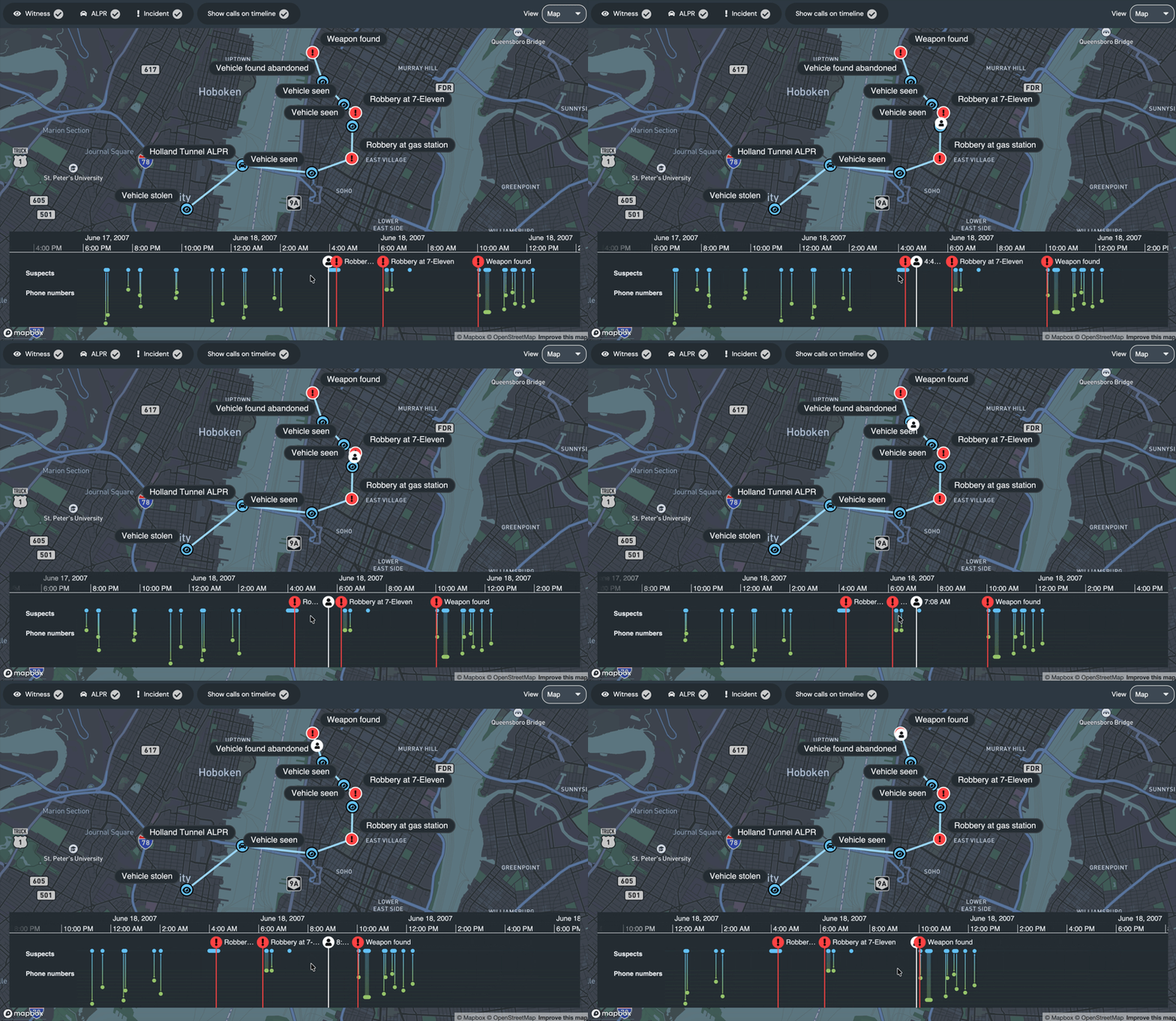
Use this showcase if you’re building a law enforcement application where investigators need to reconstruct a case across locations and time. It shows how a map can capture the geography of an incident, while a timeline brings the sequence of events into focus - including data that do not belong naturally on the map.
View showcase
Intelligence and Security
Pattern of life
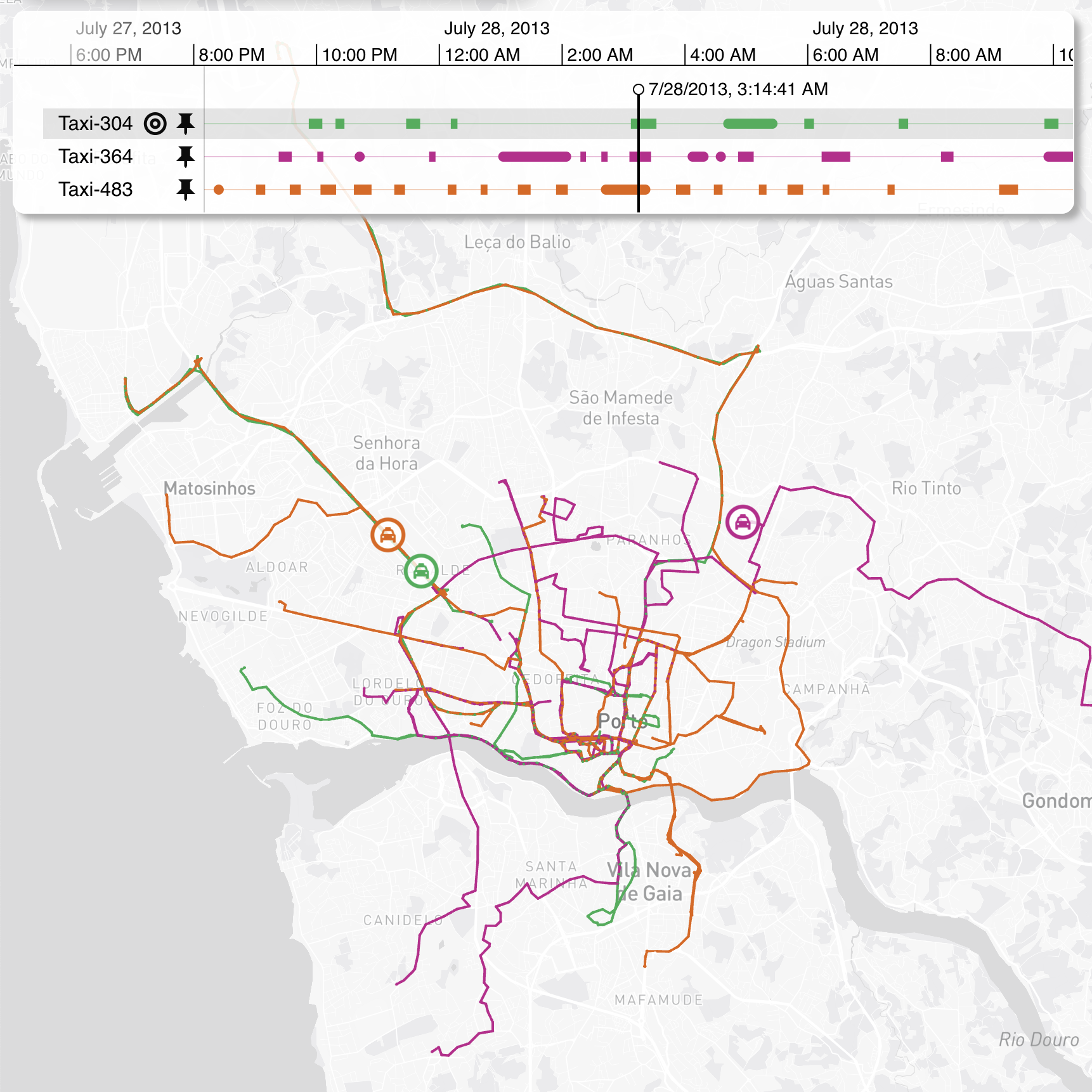
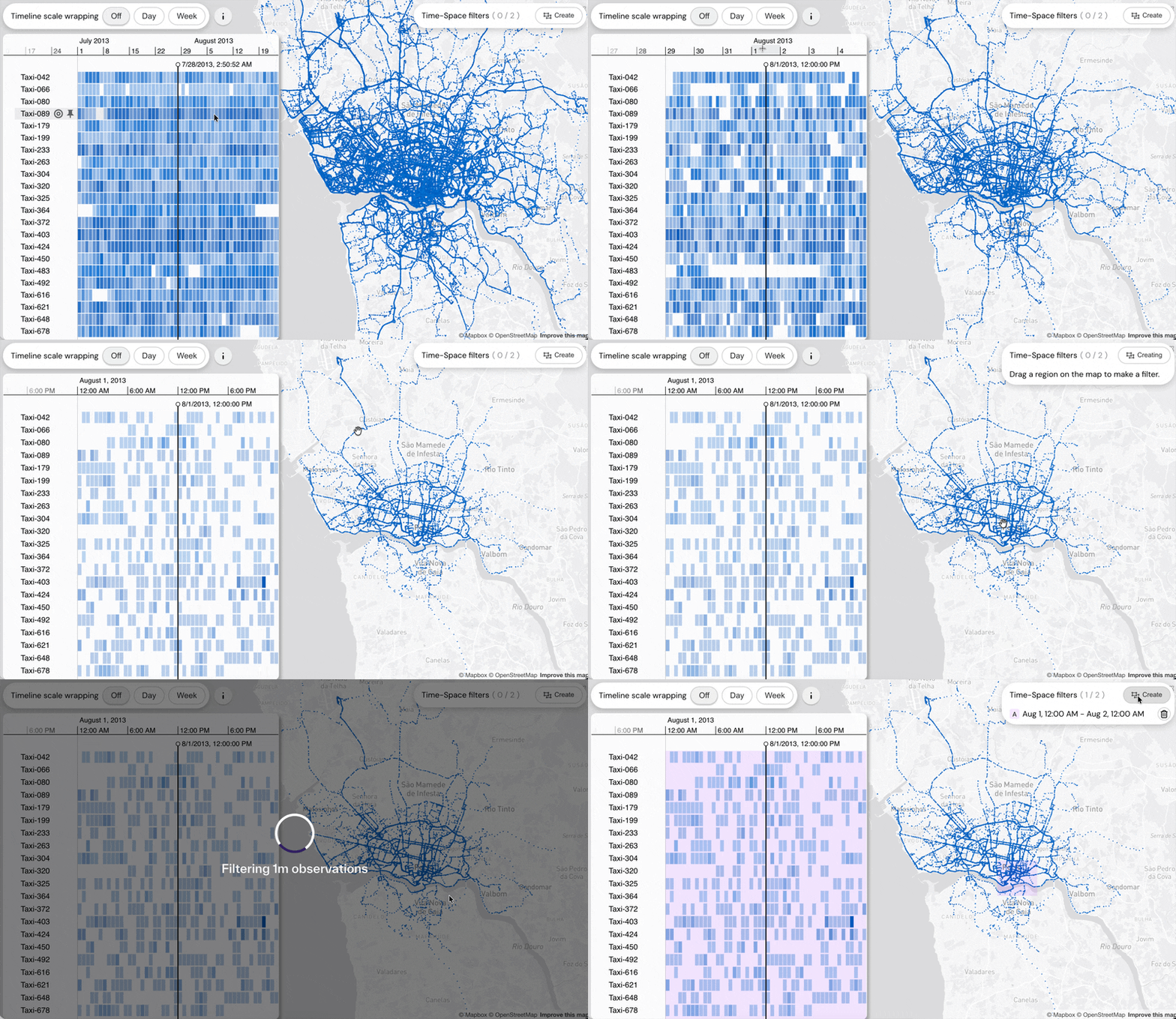
Use this showcase if you’re building an application where analysts need to understand behavior as it changes across time and location. Based on taxi observations from the Porto area of Portugal, it pairs a map with a timeline so movement data can be examined at city scale without losing sight of individual journeys.
View showcase