Search

Network alerts

Graph Cyber Security


Use this showcase if you’re building an application where users need to investigate alerts across a large IT network. It shows how a complex topology remains readable at a high level, while still giving analysts a direct route to the device or connection behind an issue.

What the showcase demonstrates

The showcase presents a fictional company network made up of offices, subnets and individual machines. Each machine includes supporting details such as its IP address and device information.

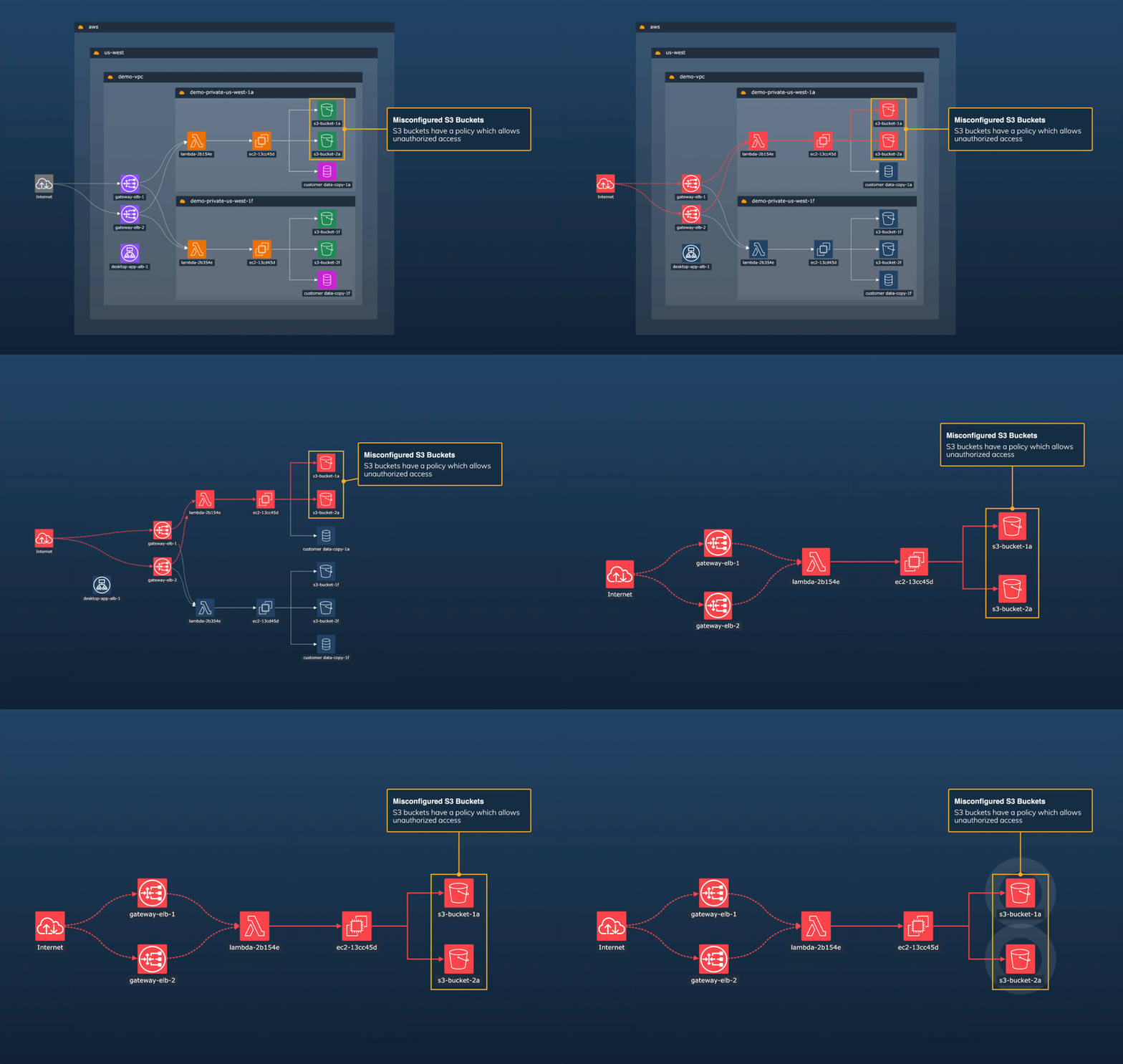
This showcase uses nested groups (combos) to give users a semantic zoom over the data. At one level, they can see that an alert involves traffic between two offices. By opening the relevant groups, they can zoom closer to the underlying machines and inspect the specific connection involved.

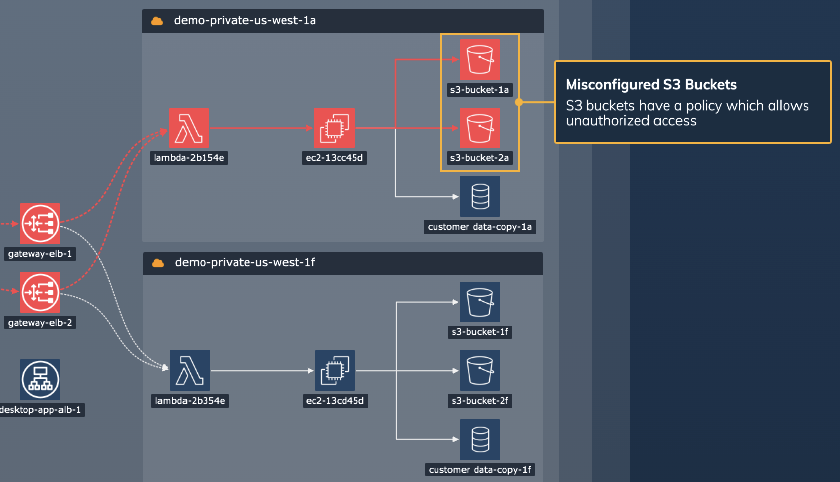
Alerts are highlighted directly on the network using indicators on both nodes and links. The interface, through two options, can move users to the affected area and draw attention to the issue after the view changes, so important alerts are not lost inside a dense topology. When the surrounding network is simplified, alert-related links remain visible to preserve the investigation path.

What you can evaluate

For product and engineering teams, this showcase demonstrates how the SDKs can support alert investigation in multi-level network data. It shows nested grouping using combos, semantic zoom, alert styling, automatic navigation and techniques for keeping important links visible when other detail is collapsed or backgrounded.

The workflow supports a core network triage task: start with the alert and understand where it sits in the topology, then drill down to the machine-level detail that explains it.
More from Cambridge Intelligence

See all →

Terms of use

These terms do not alter or supersede any existing agreements between you (or your employer) and us.

By accessing or using any Content you agree to be bound by these Terms of Use. Please review these terms carefully before using the website.

The contents of this website, including but not limited to any text, code samples, API references, schemas, interactive tools, and other materials (collectively, the 'Content'), are made available for informational and internal evaluation purposes only. All intellectual property rights in the Content are reserved. No licence is granted to use the Content for any commercial purpose, or to copy, distribute, modify, reverse-engineer, or incorporate any part of the Content into any product or service, without our prior written consent.

This Content is provided “as is” and “as available,” without any representations, warranties, or guarantees of any kind, whether express or implied, including but not limited to implied warranties of merchantability, fitness for a particular purpose, non-infringement, or accuracy. To the fullest extent permitted by applicable law, we expressly exclude and disclaim all implied warranties, conditions, and other terms that might otherwise be implied.

We disclaim all liability for any loss or damage, whether direct, indirect, incidental, consequential, or otherwise, arising from any reliance placed on the Content or from your use of it, to the fullest extent permitted by applicable law. By continuing to access or use the Content, you acknowledge and agree to these terms.